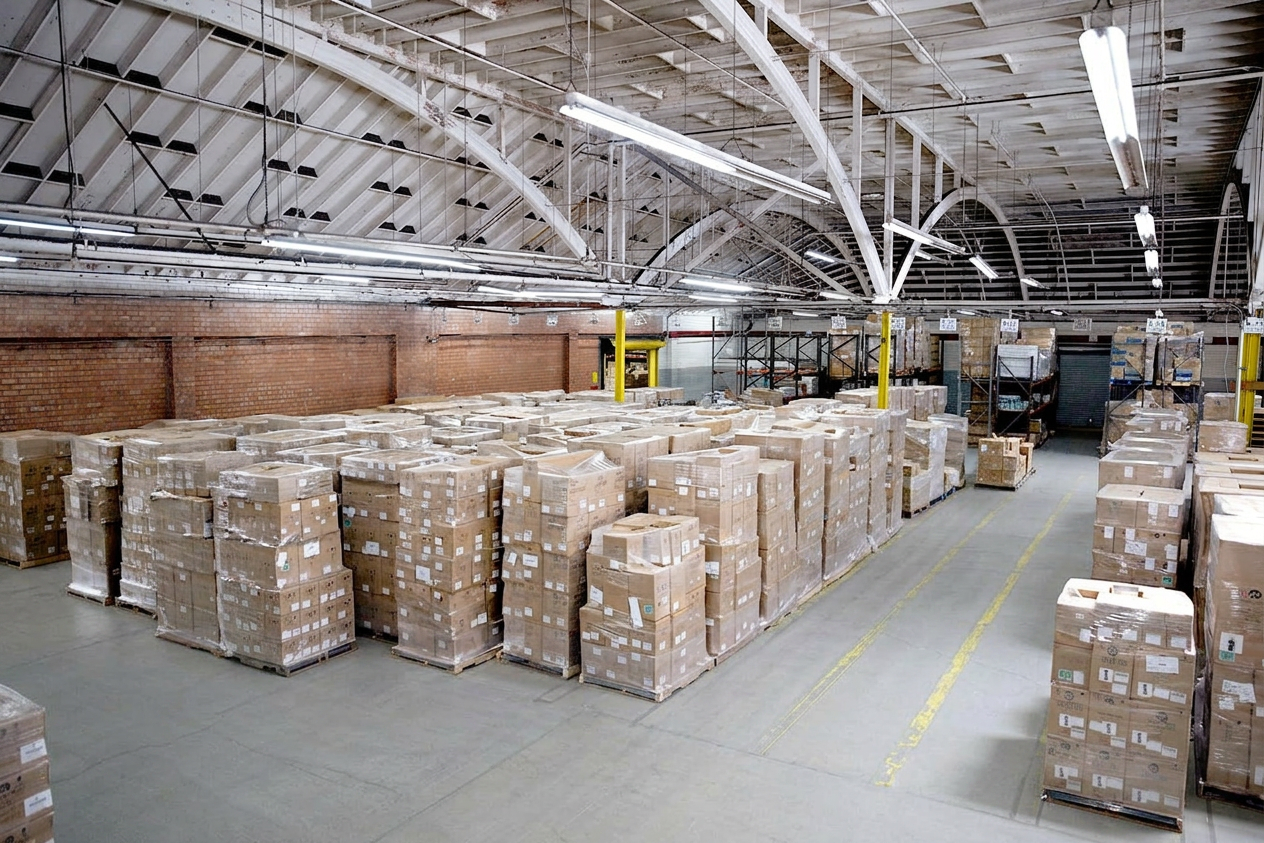
100% Owner-Operated 214,000 Sq Ft Warehouse
We own the building, run the dock, employ the team, and operate the WMS. No partner operators, no node routing, one accountable owner.
Real 2026 pricing, contract terms, port proximity, and the brand profile each 3PL actually fits. No spin — just side-by-side line-item economics for West Coast importers and DTC brands.
Most 3PL comparison pages are written by the 3PL doing the comparing. They cherry-pick categories, omit weaknesses, and inflate competitor pricing. This page does the opposite. We publish where ShipBob, ShipMonk, and Red Stag actually win — distributed-network speed, in-platform software depth, and heavy-parcel SLA respectively — because brands that fit those profiles should go there. The brands Logix wins for are West Coast importers, Amazon FBA sellers, container devanning operations, and any DTC brand tired of paying monthly software fees on top of per-order pick-pack. If that is you, the math is unambiguous. If it is not, we will say so.
Many clients also pair this with 3PL Los Angeles, Third Party Logistics LA, and Fulfillment Center Los Angeles.
We own the building, run the dock, employ the team, and operate the WMS. No partner operators, no node routing, one accountable owner.
Lowest drayage cost zone in the country for West Coast containers. Typically $250–$450 cheaper per container than the Inland Empire.
Receiving, storage, pick-pack, FBA prep — each line published in your quote. Zero monthly retainer, zero platform fee, zero minimums.
No annual commitment, no implementation fee, no exit fee. Test with one container or one month of orders; scale when it works.
FNSKU labeling, polybagging, bundling, compliant pallet builds — direct delivery to LA-area FCs (ONT8, LGB8, others) with the cheapest transfer drayage in the network.
When something needs to be fixed, you reach Mike — not a tier-1 CSM. This is the durable advantage owner-operated 3PLs hold over private-equity-rolled networks.
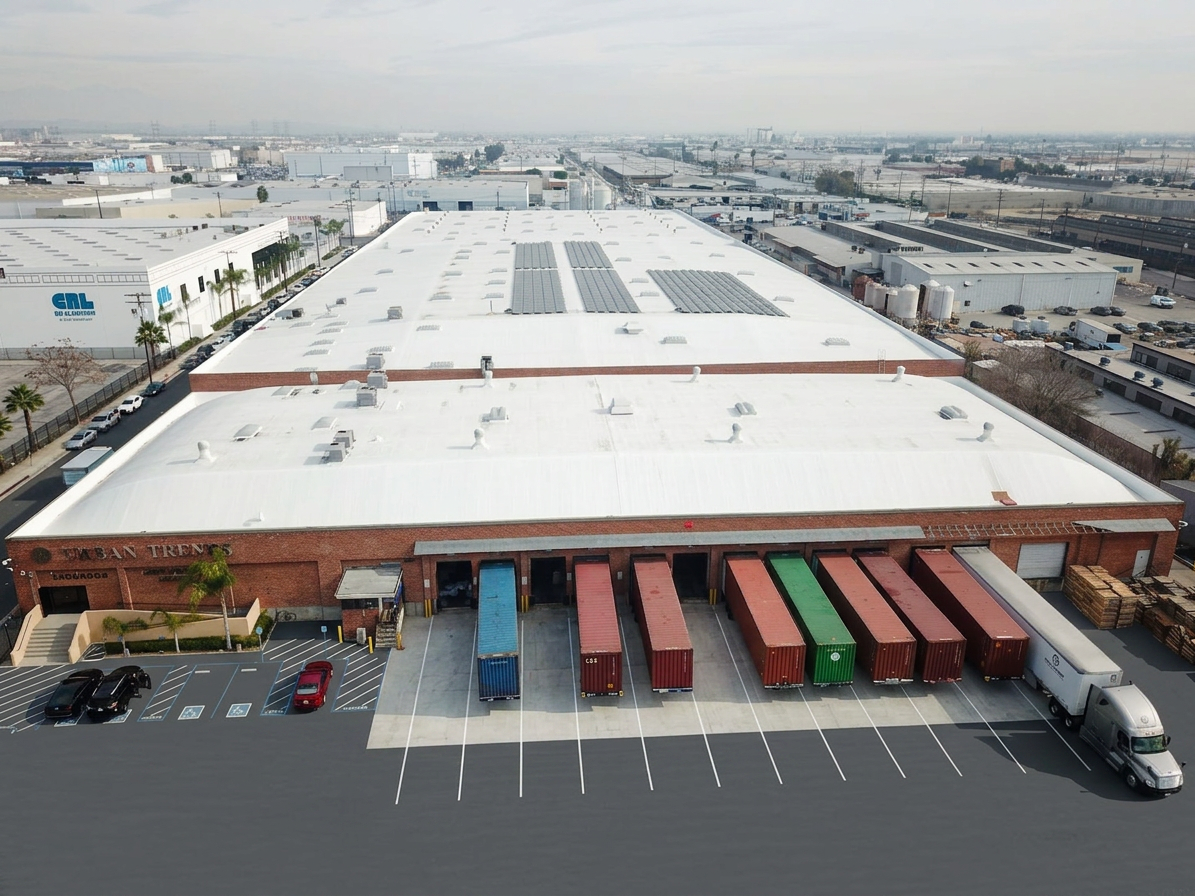
Our Vernon, CA warehouse is just minutes from the Port of Long Beach and Port of Los Angeles — the two busiest container ports in the Western Hemisphere. This location advantage means faster container drayage, lower transportation costs, and quicker time-to-shelf for your products.
Choosing a 3PL is the single most expensive operational decision most ecommerce brands make. Get it right and your fulfillment cost per order drops 20–40% while shipping speed improves. Get it wrong and you're locked into a long-term contract, paying software fees on top of pick-pack, and watching margin evaporate. The big four 3PLs most West Coast brands evaluate are Logix Fulfillment, ShipBob, ShipMonk, and Red Stag — each optimized for a different brand profile.
Logix Fulfillment is a 100% owner-operated 214,000 sq ft warehouse in Vernon, CA, 30 minutes from the Ports of Los Angeles and Long Beach. We are a true 3PL — we own the building, run the dock, employ the team, and operate the WMS. Pricing is itemized line-item, contracts are month-to-month, and there is no software fee or monthly minimum. We specialize in container devanning, e-commerce pick-pack, and Amazon FBA prep for importers landing freight on the West Coast.
ShipBob is a venture-backed distributed network of approximately 40 fulfillment centers across the US and internationally, mostly leased or partner-operated. ShipBob's strength is automatic order routing across a multi-node network to compress ground-shipping time for DTC brands selling nationally. Pricing is per-pick plus per-additional-item, with annual contracts and platform fees for advanced features. Onboarding fees apply for most plans.
ShipMonk is a software-first 3PL with seven owned facilities (FL, CA, PA, NV, KY, plus Europe). ShipMonk's differentiator is its in-house OMS/WMS platform with strong subscription-box and crowdfunding workflows. Pricing combines a monthly software fee with per-order pick-pack and per-pallet storage. Best for brands that want a single platform for inventory, orders, kitting, and returns.
Red Stag Fulfillment operates from Knoxville, TN and Salt Lake City, UT with a deliberately narrow focus on heavy, oversized, and high-value items. Red Stag carries a 100% order-accuracy and zero-shrink financial guarantee — best-in-class for products where damage or theft would be catastrophic. Pricing is premium and the SLA is contractually backed.
Below are typical published or quoted rate ranges for a standard DTC parcel under 2 lbs with one SKU, 1,000 orders/month, 50 active SKUs, importing one 40-ft container per month. Your actual quote will vary based on SKU velocity, packaging spec, and storage type. Logix publishes itemized line-item pricing and we will quote against your real data without a sales gate.
Receiving (per 40-ft container devanned, floor-loaded): Logix $400–$900. ShipBob $400–$1,200 (varies by node and whether the node accepts containers). ShipMonk $450–$1,000. Red Stag $400–$800 (limited container intake outside core SKUs).
Storage (per standard pallet per month): Logix $18–$32. ShipBob $40–$65. ShipMonk $25–$45. Red Stag $25–$40.
Pick-pack (first item per order): Logix $2.25–$3.50. ShipBob $3.00–$4.50. ShipMonk $2.95–$4.25 plus monthly software fee. Red Stag $3.25–$4.75.
Additional items per order: Logix $0.30–$0.85. ShipBob $0.40–$1.10. ShipMonk $0.40–$0.95. Red Stag $0.50–$1.20.
Amazon FBA prep per unit (FNSKU label, polybag, basic): Logix $0.85–$1.85. ShipBob $1.25–$2.50 if available at your node. ShipMonk $1.10–$2.25. Red Stag — limited FBA prep scope.
Monthly platform fee: Logix $0. ShipBob plan-dependent ($0 starter, hundreds/month for advanced). ShipMonk $250–$2,000+ tiered. Red Stag $0 above minimums.
For a brand at the 1,000-order/month profile importing one container monthly, the difference in total monthly cost between Logix and the highest-priced option typically lands between $1,800 and $4,500 — recurring, every month.
Choose Logix if: you import freight via the West Coast and want the lowest drayage cost in the country; you sell on Shopify, Amazon, Walmart, or TikTok Shop and need pick-pack plus FBA prep under one roof; you want itemized pricing with no monthly fee and a month-to-month contract; you want to talk to the owner, not a CSM queue.
Choose ShipBob if: your customer base is geographically distributed nationally and 2-day ground from a single facility is not fast enough; you do not import containers and your inventory is domestic; you are willing to split inventory across multiple nodes and pay node-routing fees in exchange for shipping speed; you are comfortable with annual contracts and implementation fees.
Choose ShipMonk if: subscription boxes, kitting, crowdfunding, or complex SKU configurations are central to your operation; you want one in-house platform for inventory, orders, returns, and B2B/retail; you value software depth over per-order cost.
Choose Red Stag if: your average parcel is 10+ lbs, fragile, expensive, or theft-attractive; you operate in furniture, appliances, firearms-adjacent, or high-end electronics; you are willing to pay premium per-order rates for a contractually guaranteed zero-error SLA.
Distributed networks (ShipBob, and to a lesser extent ShipMonk) optimize shipping time by storing inventory in multiple facilities. The trade-off is real and often understated. Every additional node multiplies receiving cost (you pay to inbound the same SKU into each warehouse), increases working capital tied up in safety stock, complicates returns routing, and adds node-rebalancing transfers when one facility runs low. For brands under ~5,000 orders/month with a West Coast customer skew, a single owner-operated warehouse in Vernon, CA reaches roughly 60 million consumers in 1–2 day ground transit at materially lower total cost than a 3-node distributed network.
The other hidden cost is accountability. In a partner-operated network, the brand you signed with may not be the operator who actually touches your inventory. When something goes wrong — a mis-pick, a damaged inbound, a missed Amazon appointment — accountability gets diffused across a CSM, a node manager, and a partner operator who has no direct relationship with you. Owner-operated 3PLs collapse that accountability stack: if Mike answers the phone, the issue gets resolved.
Get itemized quotes from at least two providers using identical inputs: monthly order count, average items per order, SKU count, average pallet count in storage, container volume per month, FBA prep volume, and average parcel weight. Compare line-item rates — not bundled monthly estimates — so you can model future scenarios (50% volume growth, holiday peak, new SKU launches) without re-quoting.
Request the WMS demo and the actual reporting view your team will use day-to-day. Ask for three current-client references in your product category. Ask for the cost to leave: how much notice, what data export, and what return-of-inventory fees apply. A 3PL confident in their value will quote all of that without friction.
Logix Fulfillment will produce a full itemized quote inside one business day. Send your SKU list and a typical month of order data — we will return real numbers, not a pitch deck.
Brands that come to Logix for 3PL Comparison also explore these high-converting service pages — owner-operated and minutes from the Ports of LA & Long Beach.
Warehousing near Port of LA & LGB — 214,000 sq ft facility.
Vernon, CAShopify, Amazon, Walmart & DTC — pick, pack, ship.
Southern CaliforniaFloor-loaded or palletized — fast turnaround near the ports.
Vernon, CALabeling, carton forwarding, pallet prep & routing compliance.
Los AngelesReduce drayage costs near the Ports of LA & Long Beach.
Vernon, CAStore integration, inventory sync, branded packaging, and returns for DTC brands.
Vernon, CAHand-picked services and locations most relevant to 3PL Comparison.
One team, one warehouse, every fulfillment need across Los Angeles & Southern California.
Get a custom quote from our team. We'll analyze your fulfillment needs and show you how LOGIX can save you time and money.
Our clients trust us with their fulfillment — and they're not shy about saying so. See what real businesses say about working with LOGIX Fulfillment.