If you import inventory through the West Coast and sell it on Amazon, Shopify, TikTok Shop, or into retail, you are probably searching for three different vendors right now: a **California FBA prep center** to get your shipments accepted at Amazon, an **e-commerce fulfillment center** to ship your DTC orders, and a **3PL warehouse** to store pallets and handle container freight. Most brands end up stitching together two or three providers, paying margin on every handoff, and reconciling inventory across systems that don't talk to each other.
There is a faster, cheaper, and more accurate model: do all three jobs in one owner-operated building, 30 minutes from the Ports of LA and Long Beach. That's what Logix runs from our 214,000 sq ft Vernon, CA warehouse — and this guide breaks down what each of those three services actually means, why combining them matters, and what to look for when you're shopping for a 3PL in California.
Why California Is the Right State for FBA Prep, E-commerce Fulfillment, and 3PL
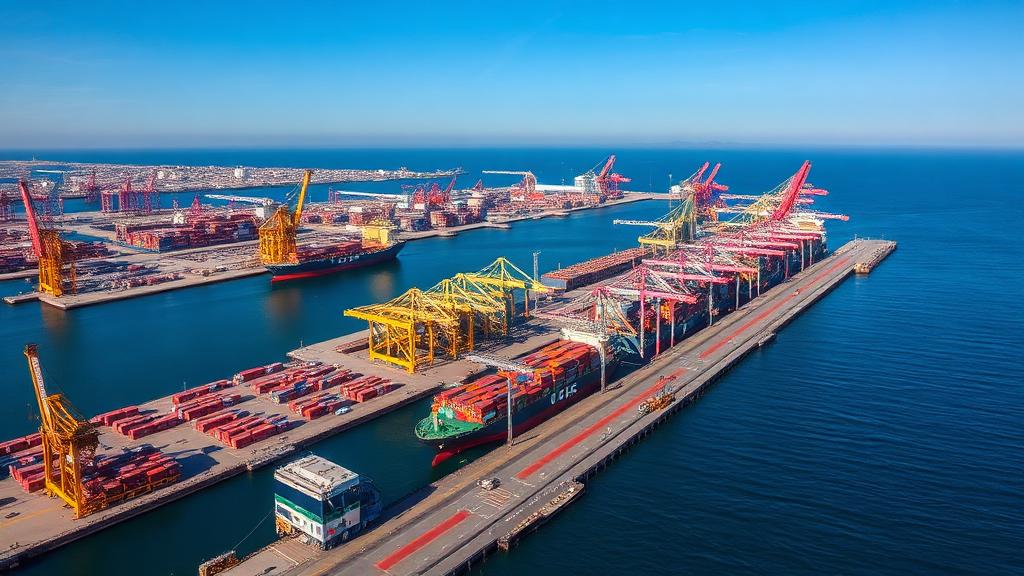
Roughly 40% of all containerized imports into the United States enter through the Port of Los Angeles and Port of Long Beach. That makes Southern California the single best place in the country to receive ocean freight, devan it, and ship it back out — whether that's a Shopify DTC order going to a consumer, an Amazon FBA shipment going to a fulfillment center, or a pallet of retail freight going to a distribution center.
Putting your inventory in a Los Angeles 3PL compresses the most expensive and slowest stretch of the supply chain — the inland drayage and transload leg — into a 30-minute drive. Drayage costs drop. Container demurrage risk drops. Inbound-to-outbound cycle time drops from days to hours. And for FBA sellers specifically, the closer your prep is to the port, the less you spend re-handling freight before it ever hits the Amazon network.
What a California FBA Prep Center Actually Does
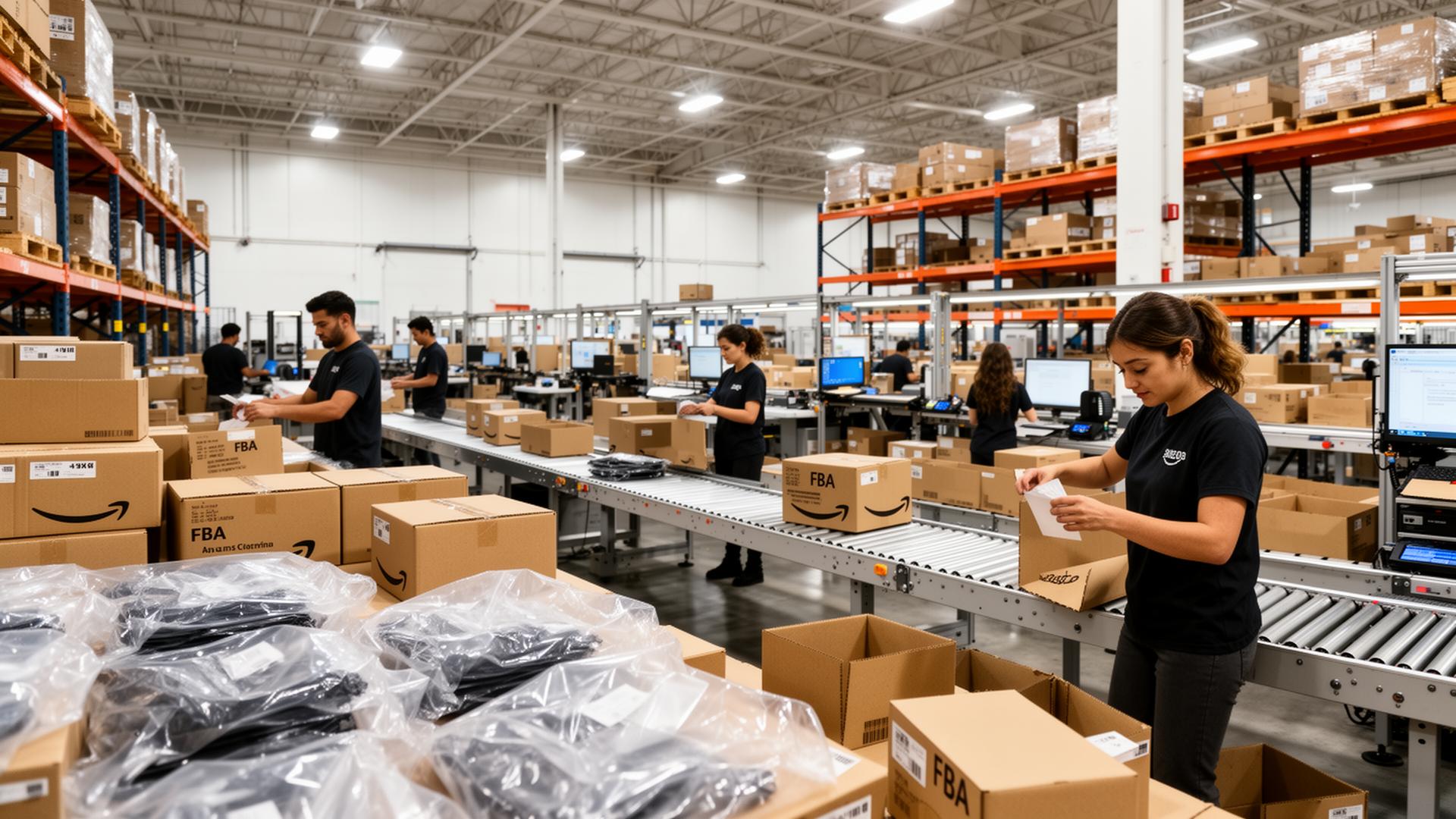
A California FBA prep center prepares your inventory so it is accepted at Amazon's fulfillment centers without rejection, relabel fees, or chargebacks. The work is unglamorous but expensive when it goes wrong:
- **FNSKU labeling** on every unit, applied so it covers the manufacturer barcode.
- **Polybagging** with proper suffocation warnings on soft goods, apparel, and anything Amazon's policy requires.
- **Bubble wrap and protective packaging** on fragile SKUs.
- **Bundling and kitting** for multi-pack ASINs.
- **Expiration date labeling** on consumables and beauty.
- **Carton labeling, palletization, and shipment plan execution** in Seller Central — built to Amazon's exact carton, weight, and pallet rules.
- **Appointment scheduling and BOL generation** for LTL/FTL drops at Amazon FCs.
Doing this in California — and ideally in a building that can also receive your inbound container — eliminates the wasted leg of trucking inventory to a Midwest prep center just to truck it back to a West Coast Amazon FC. Most of Amazon's FBA volume flows through California and Texas FCs anyway, so prepping in LA cuts inbound transit by days. See our Amazon FBA prep checklist for the full SOP we run on every shipment.
What an E-commerce Fulfillment Center Does
An e-commerce fulfillment center handles your DTC orders — the ones placed on your own Shopify, WooCommerce, BigCommerce, or TikTok Shop storefront. The workflow is different from FBA prep because every order is a one-or-two-unit pick going to a consumer, not a pallet going to a warehouse.
What a real e-commerce fulfillment center delivers:
- **Direct integrations** with Shopify, WooCommerce, BigCommerce, Amazon Seller Central, Walmart, TikTok Shop, eBay, Etsy, and 20+ other channels — so orders flow in automatically.
- **Same-day shipping** on orders placed before the daily cutoff. (Same-day shipping fulfillment is the standard at Logix.)
- **Discounted carrier rates** across UPS, FedEx, USPS, and DHL — typically 30–60% below published retail because the 3PL aggregates millions of parcels per year.
- **Branded packaging** options, custom inserts, gift notes, and unboxing experiences.
- **Real-time inventory sync** across every sales channel so you don't oversell.
- **Returns processing**, restocking, and refurbishment of customer returns.
When your e-commerce fulfillment and your FBA prep share the same building, the same WMS, and the same team, you can split inbound containers across both channels on the same dock — without the inventory ever moving twice.
What a 3PL Warehouse Adds on Top
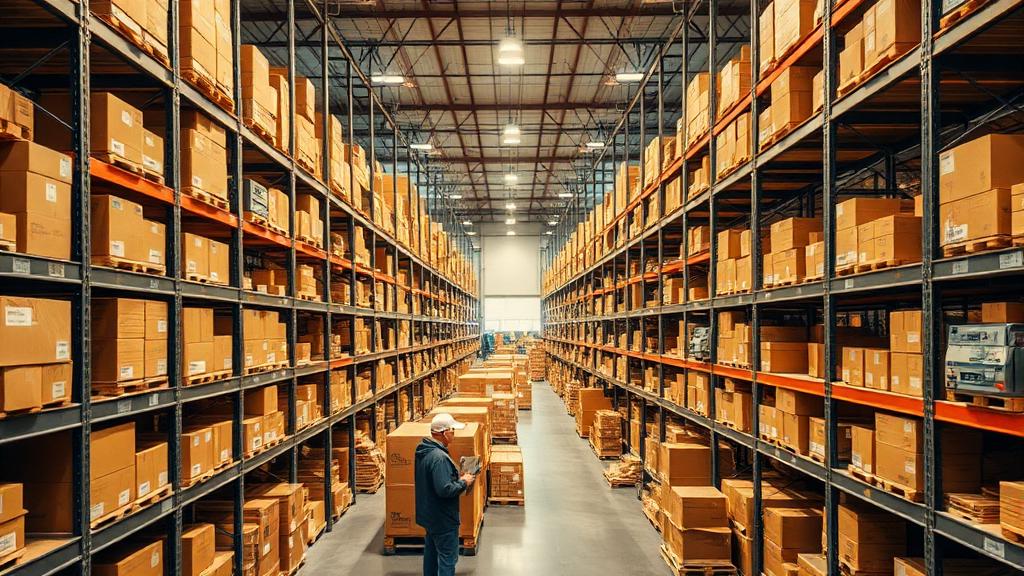
The 3PL warehouse layer is what makes the first two services scale. A real 3PL in Los Angeles gives you:
- **Container unloading and devanning** at the dock — 20', 40', and 40' HC containers, floor-loaded or palletized.
- **Transloading** from ocean container to outbound truck, often the same day.
- **Cross-docking** for retail and wholesale freight that doesn't need to be put away.
- **Long-term pallet storage** with cycle counts, lot/expiration tracking, and serial number capture.
- **Pick-and-pack** at the case, inner, or each level.
- **B2B and retail compliance** — EDI, routing guides, ASN generation, retailer-specific labeling for Walmart, Target, Costco, TJX, Nordstrom, and more.
- **Freight forwarder services** including drayage coordination, chassis management, and ISF/customs document handoff.
Why Combining All Three Under One Roof Beats Stitching Vendors Together
**1. One inventory ledger.** Your FBA-bound units, your DTC inventory, and your wholesale pallets all live in the same WMS. You don't reconcile three systems.
**2. One container, three destinations.** A single 40' HC can be split at the dock — some cartons get FBA prep and ship to Amazon, some get put away for DTC pick-and-pack, some get cross-docked to a retailer. No re-handling, no inter-warehouse transfers.
**3. One invoice.** Storage, FBA prep, DTC pick-and-pack, container devanning, and outbound freight all show up on one itemized statement.
**4. One accountable team.** A dedicated account manager who sits in the same building as your inventory — not a ticket queue, not a partner facility.
**5. One geography.** Vernon, CA is 30 minutes from POLB, 30 minutes from POLA, and inside the densest distribution corridor on the West Coast. The same dock that receives your container is the same dock your FBA freight leaves from.
Amazon FBA Prep in Los Angeles: Why Sellers Are Moving Prep to LA
Sellers shopping for Amazon FBA prep in Los Angeles are usually trying to fix one of three problems: prep is too slow, prep is too far from the port, or prep is too disconnected from their DTC inventory. A Los Angeles FBA prep center solves all three at once.
**Speed.** A container that lands at POLB on Monday morning can be devanned, prepped to Amazon's spec, and dropped at an LA-area Amazon FC by Wednesday. The same container shipped to a Midwest prep house adds 5–7 days of inbound transit each way before a single unit reaches Amazon's network.
**Cost.** Drayage from POLB to Vernon is short-haul — typically a single chassis turn. Trucking the same container 1,800+ miles to a Midwest prep house, then trucking the prepped freight back across the country to an LA FC, doubles your inbound freight cost and exposes you to demurrage if anything slips.
**Inventory unification.** If your DTC fulfillment is in LA but your FBA prep is in Kentucky, you cannot split a container across both channels without re-handling. Running FBA prep and DTC fulfillment in the same LA warehouse means one inventory pool, one cycle count, and one decision point on whether each unit goes to Amazon or to a customer.
Logix runs a full Amazon FBA prep center in Los Angeles — FNSKU labeling, polybagging, bundling, expiration date marking, carton labeling, palletization, shipment plan creation, and LTL/FTL appointment booking. Same building also handles Walmart WFS prep, TikTok Shop fulfillment, and Shopify fulfillment, so multi-channel sellers run on one inventory ledger.
3PL Warehouse Near the Ports of LA and Long Beach
A 3PL warehouse near the Port of Long Beach (or the Port of LA) is the single highest-leverage decision an importer can make on the West Coast. Here is what proximity actually buys you:
- **Lower drayage cost.** Vernon, CA is roughly 30 minutes from both POLB and POLA. Drayage to inland warehouses (Inland Empire, Riverside, San Bernardino) adds 60–120 minutes of round-trip time per container, which translates directly into higher drayage invoices and fewer chassis turns per day.
- **Lower demurrage and per-diem risk.** Short-haul drayage from a port-adjacent warehouse means containers clear the terminal faster, chassis are returned faster, and per-diem accrual is minimized. This matters most during port congestion windows.
- **Same-day transloading.** A 40' HC ocean container can be devanned and reloaded onto domestic 53' trailers the same day it arrives at the dock. Inland warehouses cannot offer this because the container is still in transit when an LA-based 3PL has already turned the freight.
- **24-hour container unloading** appointments — important during peak season when terminal cutoffs tighten.
- **Faster cross-docking** for retail freight that doesn't need to be stored — pallets in, pallets out, same dock door.
- **Direct routing for freight forwarders.** Freight forwarders routing client containers through POLB / POLA prefer warehouses they can dispatch to and back in a single driver shift.
Logix's Vernon, CA facility is positioned specifically for this use case: 30 minutes from POLB, 30 minutes from POLA, 30 minutes from downtown LA, 30 minutes from LAX. Inside the densest distribution corridor on the West Coast, with rail access, LTL/FTL carrier density, and same-day parcel cutoffs. See the dedicated pages for warehouse near Port of LA, warehouse near Port of Long Beach, and warehouse near LAX.
Industries Using This Combined LA Model
The California FBA prep + e-commerce fulfillment + 3PL warehouse model fits any importer-sourced brand selling through multiple channels. The brands we see consolidate fastest:
- **Apparel and accessories** — high SKU counts, polybagging, hangtag work, retailer-specific labeling.
- **Beauty and personal care** — expiration date tracking, lot control, fragile packing.
- **Home goods and furniture** — oversize handling, FBA dimensional rules, freight-class management.
- **Consumer electronics** — serial capture, anti-theft handling, lithium-battery compliance.
- **Pet products** — bulky cartons, multi-channel demand, subscription cadence.
- **Food and beverage** — FIFO rotation, expiration tracking, retail-compliance prep.
- **Subscription boxes** — kitting, assembly, and recurring fulfillment cycles.
What to Look for in a California 3PL
Not every facility marketing itself as a California FBA prep center, e-commerce fulfillment center, or 3PL warehouse can actually deliver all three. Ask:
1. **Do you own the building, or are you reselling space?** Owner-operated 3PLs control labor and capacity; asset-light brokers don't. (We wrote a full guide on true 3PL vs asset-light 3PL.)
2. **What's your drive time to POLB and POLA?** Under 30 minutes is the benchmark for transload-grade efficiency.
3. **Do you handle FBA prep, DTC fulfillment, and pallet storage in the same WMS?** If they're separate systems or separate buildings, you're paying for the handoff.
4. **What's your same-day shipping cutoff?** A real e-commerce fulfillment center publishes one.
5. **Can I tour the facility this week?** Owner-operators can; brokers usually can't.
6. **What integrations are pre-built?** Shopify, Amazon, TikTok Shop, Walmart, and the rest should be plug-and-play, not custom development.
How Logix Runs the Model
Logix operates one 214,000 sq ft solar-powered warehouse in Vernon, CA — owner-operated, W-2 employees, single WMS. The same building handles container devanning, Amazon FBA prep, Shopify and TikTok Shop fulfillment, retail compliance, and long-term pallet storage. Same-day shipping cutoff is 2:00 PM PT. Drive time to POLB is roughly 30 minutes. Pricing is itemized and transparent — storage, receiving, pick, pack, FBA prep, and outbound freight all on one statement.
Brands working with us typically consolidate from two or three vendors (a Midwest FBA prep house, a separate DTC fulfillment center, and a port-area drayage warehouse) into a single California 3PL. The result is shorter inbound transit, lower drayage cost, higher pick accuracy, and one accountable team across every channel.
The Bottom Line
If you are importing into the West Coast and selling on Amazon, Shopify, TikTok Shop, or into retail, the most efficient configuration is a single owner-operated **California FBA prep center, e-commerce fulfillment center, and 3PL warehouse** under one roof — within 30 minutes of the Ports of LA and Long Beach. That's exactly what Logix is built for. Get a free quote and we'll size pricing for your SKU count, order volume, and channel mix.