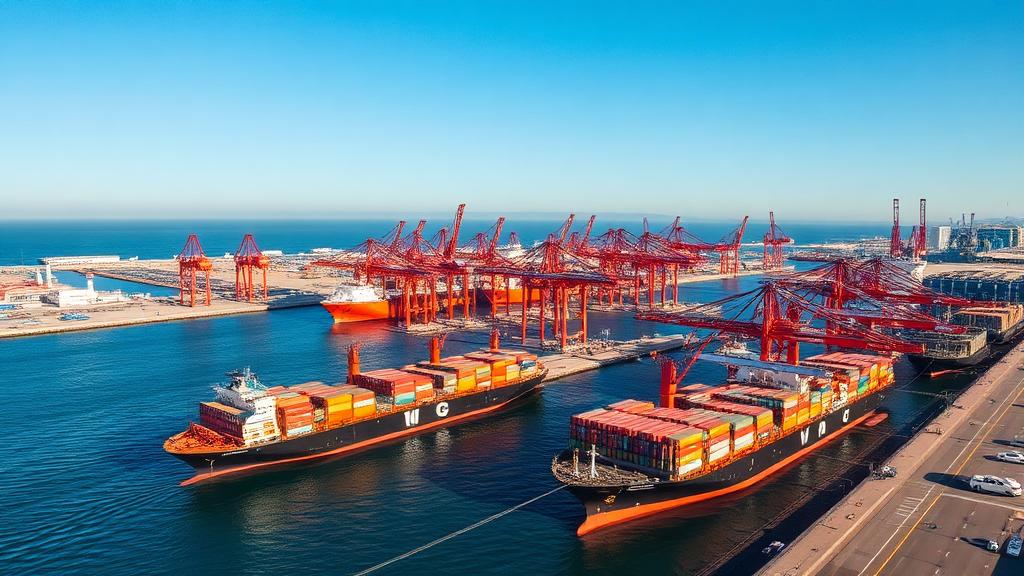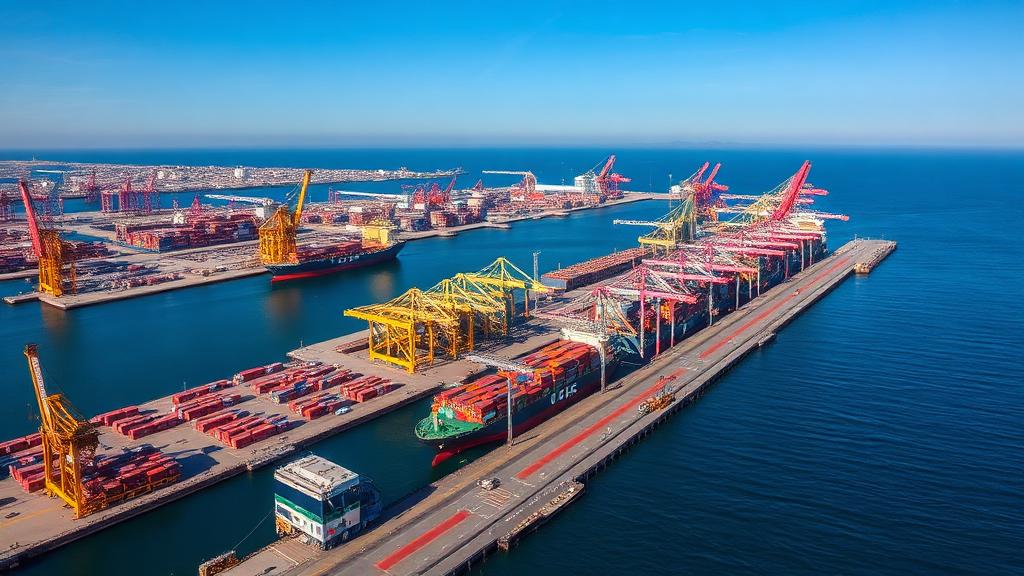
If you import through the Port of Long Beach, every hour your container sits at the terminal is an hour you're losing money. Demurrage starts ticking the moment your free time expires. Per diem starts the moment the chassis leaves. And every day your inventory is stuck in a steel box is a day it isn't selling. The fix isn't a bigger warehouse or a cheaper drayage rate — it's a coordinated 24-hour playbook that moves freight from POLB to a 3PL warehouse, through devanning, into staging, and back out the door, all on the same business day.
This guide walks importers and freight forwarders through the exact six-step process Logix runs every day at our 214,000 sq ft Vernon, CA facility — under 10 miles and roughly 30 minutes from POLB. We'll cover what has to happen before the vessel even arrives, how to compress the dwell-time at every step, and how same-day transloading and cross-docking eliminate the storage step entirely when freight is moving straight to a retailer or another DC.
Why 24 Hours Is the Right Benchmark
The Port of Long Beach offers limited free time before demurrage kicks in — typically 4 to 5 days for import containers. That sounds like a lot until you factor in chassis shortages, terminal appointment availability, congestion, and the time required to actually devan and put inventory away once the container reaches the warehouse. Stretch any one of those steps and your free time evaporates. The brands and forwarders winning at POLB aren't the ones with the most warehouse space — they're the ones with a 24-hour playbook from terminal pull to outbound dispatch.
Step 1: Pre-Arrival Booking & Documentation
The 24-hour clock actually starts before the container lands. As soon as the BOL, ISF, and arrival notice are available, your 3PL should be booking the chassis, the trucker, and the terminal appointment. At Logix, we pre-alert dock doors, assign WMS receiving lanes, and confirm the outbound destination — all before the vessel arrives. Done right, the container is already on a chassis the morning it's released.
Step 2: Drayage from the Port
This is where proximity wins. Our Vernon facility is under 10 miles from POLB — close enough that a single trucker can pull two or three containers per shift, instead of one. Compare that to drayage from the Inland Empire (60+ miles), which usually means one container per trucker per day plus higher per-mile rates. Short-haul drayage from POLB to Vernon is consistently the lowest-cost zone in the LA basin and the only one that supports a same-day-pull workflow.
Step 3: Container Receiving & Devanning
Containers booked in by 10am are unloaded the same business day. Floor-loaded 40' HC containers take 2–4 hours to devan with a trained crew; palletized containers are typically done in under an hour. Every container is photographed at seal break, mid-unload, and empty — so any damage or shortage is documented within the carrier's claim window. Cartons are scanned into the WMS as they come off, with a real-time receiving report pushed to your team within hours, not days. Read more about our container unloading and devanning service.
Step 4: Floor Unloading to Palletization
Most ocean containers arrive floor-loaded — hand-stacked from front to back to maximize cubic utilization. To move that freight efficiently downstream, it has to be palletized. Our team builds standard, retailer-compliant, or custom pallet patterns at the unload door, shrink-wraps, applies corner board, and stages the pallets directly into the WMS putaway queue. For retail-bound freight, we follow Wayfair, Target, Amazon, and other major retailer routing guides at this step so pallets are already chargeback-proof when they leave the dock.
Step 5: Inventory Staging or Same-Day Cross-Dock
This is the decision point that defines whether you're operating a true 24-hour pipeline. If the freight is going into inventory, pallets are racked and the SKUs become available in your live WMS feed within hours of devan. If the freight is moving straight to another DC, retailer, or end consignee, it skips storage entirely and goes through our cross-dock — devanned, sorted, palletized, and staged at the outbound door, often without ever touching a rack. Same-day transload from Long Beach is one of the highest-leverage moves an importer can make: zero storage fees, zero double-handling, and freight that's on the road the same day it cleared the port.
Step 6: Outbound Dispatch & ASN
Outbound trailers are loaded and dispatched the same business day. We coordinate LTL, FTL, parcel, and intermodal carriers — your nominated carriers or our negotiated rates, your choice. ASN, BOL, and POD documentation are pushed back to your TMS or your forwarder's file system within hours of dispatch. The container is empty, the inventory is moving, and the demurrage clock never started.
Why Vernon, CA Is the Right Origin Point
Vernon sits roughly 30 minutes from POLB and 30 minutes from POLA, with direct freeway access to I-710, I-5, SR-60, and I-110. That puts your inventory inside the densest distribution corridor in the Western US — 22+ million Southern California consumers within local-delivery range, the entire West Coast within 1–2 day ground, and a direct shot to LAX for air-expedited freight. There is no other zone in the LA basin that combines this proximity to the ports with this proximity to outbound carriers and this density of customers. Read more about why a warehouse near the Port of Long Beach matters.
How Logix Runs the 24-Hour Pipeline
We're a 100% owner-operated 3PL — not a broker, not a forwarder, not a leased third-party site. Our team owns the dock, the chassis coordination, the WMS, and the outbound dispatch. That means one accountable phone number for every step of the 24-hour pipeline and transparent, itemized billing for drayage, devanning, palletization, staging, and outbound. If you're an importer or freight forwarder tired of watching containers age out of free time at POLB, request a quote and we'll map your typical container profile to a 24-hour cost-and-timeline plan.