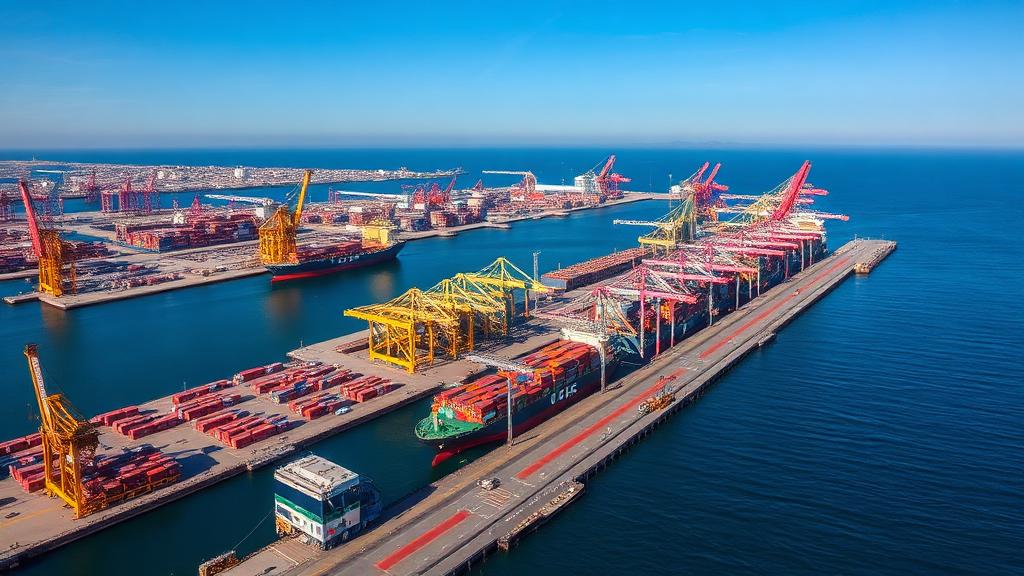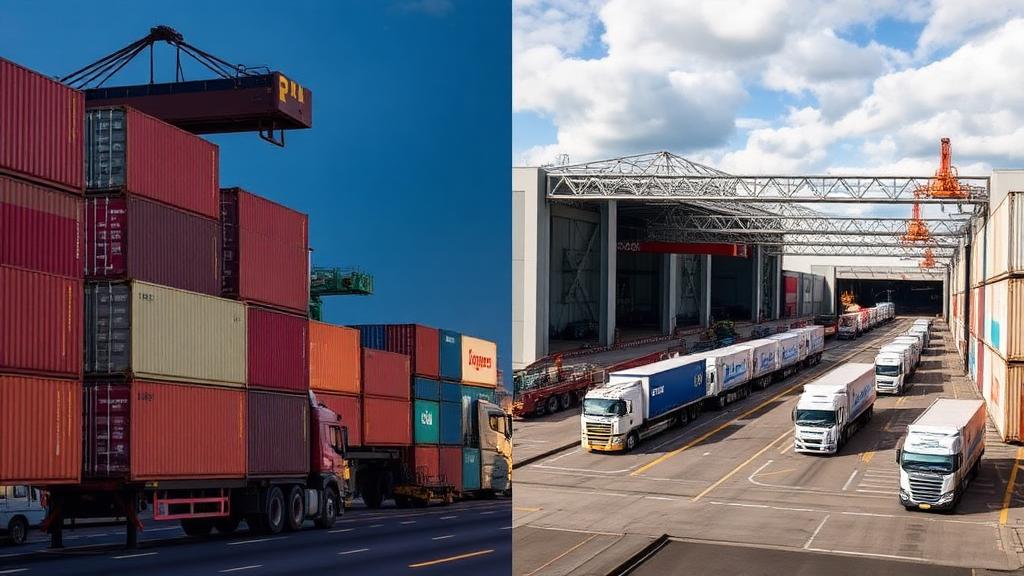
If you import goods through the Port of Long Beach or Port of Los Angeles, you've likely heard the terms transloading and cross docking used interchangeably. But they're not the same thing — and using the wrong strategy can cost you time, money, and competitive advantage. This guide explains both processes in detail, compares their costs, and helps you determine which one (or both) your supply chain needs.
What Is Container Transloading?
Transloading is the process of transferring cargo from one type of transportation container to another. In import logistics, this specifically means unloading goods from a 40-foot ocean shipping container and reloading them into 53-foot domestic trailers for inland distribution. The key advantage: domestic trailers hold approximately 60-70% more volume than ocean containers. This means fewer trucks are needed to move the same amount of product, significantly reducing inland freight costs.
The Transloading Process Step by Step
1) **Drayage:** A truck picks up the ocean container from the port and delivers it to a nearby transloading facility. 2) **Devanning:** The ocean container is unloaded — goods are inspected, counted, and staged. 3) **Sorting:** Cargo is organized by destination, retailer, or distribution center. 4) **Reloading:** Products are loaded into 53-foot domestic trailers, maximizing cube utilization. 5) **Distribution:** Loaded trailers depart for regional warehouses, retail DCs, or Amazon fulfillment centers across the country. 6) **Container return:** The empty ocean container and chassis are returned to the port or yard.
What Is Cross Docking?
Cross docking in Los Angeles is a logistics strategy where incoming goods are received at a warehouse dock and immediately transferred to outbound transportation with minimal or zero storage time. Products literally 'cross the dock' — they come in one door and go out another, often within the same day. Cross docking is a speed play: it eliminates warehousing entirely for goods that already have a confirmed destination.
The Cross Docking Process Step by Step
1) **Inbound scheduling:** Incoming shipments (containers, LTL, or full truckloads) arrive at precisely scheduled times. 2) **Receiving & sorting:** Goods are unloaded, scanned, and immediately sorted by outbound destination — no put-away to storage. 3) **Consolidation:** Products from multiple inbound sources may be consolidated into single outbound shipments. 4) **Loading:** Sorted goods are loaded directly onto outbound trucks at the opposite dock. 5) **Dispatch:** Outbound trucks depart, often within 2-12 hours of the inbound arrival.
Key Differences: Transloading vs Cross Docking
Storage time: Transloading may involve 1-3 days of staging; cross docking targets zero storage. **Container type
Cost Comparison
Transloading cost components (per 40' container): drayage, devanning labor, reloading into a domestic trailer, and domestic freight to the destination. **Cross docking cost components (per shipment)
When to Use Transloading
Transloading makes the most sense when: you import full ocean containers through the Port of Long Beach, your goods need to reach multiple inland destinations (retail DCs, regional warehouses, FBA centers), domestic trailer capacity gives you meaningful freight savings, you can tolerate 1-3 days of staging time, and your products don't require inspection or value-added services before distribution.
When to Use Cross Docking
Cross docking is ideal when: goods are pre-sold or pre-allocated to specific destinations, speed to market is critical (perishables, seasonal goods, promotions), you want to eliminate warehousing costs entirely, inbound and outbound schedules can be precisely coordinated, and volumes are consistent enough to justify the operational complexity. Many retail distribution programs use cross docking to move goods from import containers directly to retail stores.
The Hybrid: Transloading + Cross Docking
Many importers use both strategies within the same container. Example: a home goods brand receives a 40' container at Logix in Vernon, CA. 60% of the goods are cross-docked — they're pre-sold to Target and Walmart DCs, so they're sorted and shipped out the same day. 30% are transloaded into domestic trailers bound for the brand's East Coast 3PL warehouse. 10% remain in storage for DTC ecommerce fulfillment. This hybrid approach maximizes efficiency at every level.
Why Location Matters for Both Strategies
Both transloading and cross docking are exponentially more effective when performed near the port. A facility in Vernon, CA — 30 minutes from both ports — can receive a container the morning it's released and have transloaded trailers on the road by afternoon. A facility 60+ miles inland adds a full day of transit just for the initial drayage, making same-day cross docking impossible and transloading less cost-effective.
How Logix Handles Both
At Logix Fulfillment, our Vernon, CA warehouse is purpose-built for both transloading and cross docking operations. With dock doors on multiple sides, we can receive inbound containers and dispatch outbound trailers simultaneously. Our team processes container unloading, sorting, and reloading daily, and our proximity to the Port of Long Beach means same-day turnaround is standard — not exceptional. Contact us for a free logistics consultation and we'll help you determine the optimal strategy for your supply chain.