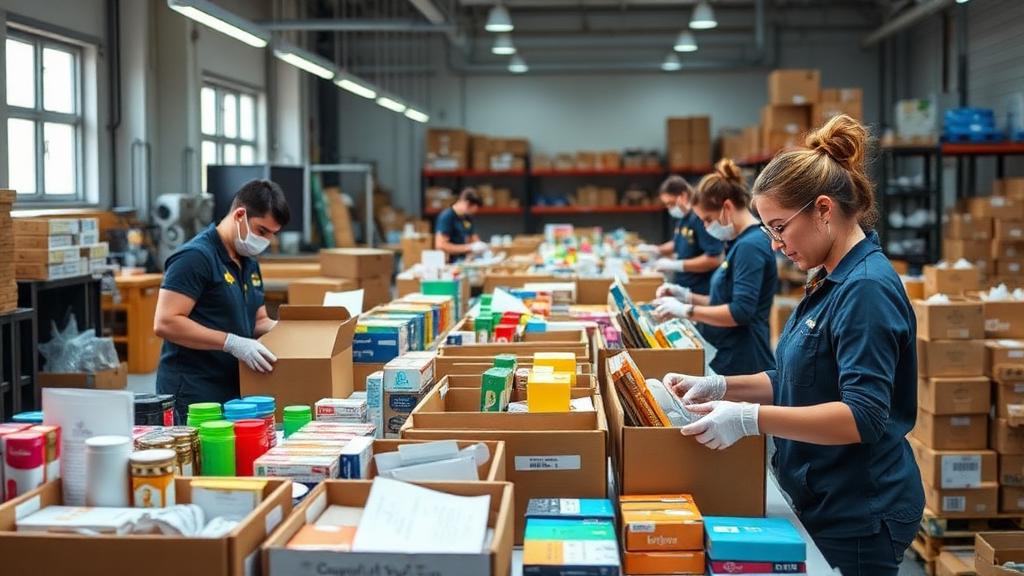
For most e-commerce brands, Q4 (October through December) generates 30-40% of annual revenue. Black Friday, Cyber Monday, holiday gifting, and year-end promotions create a surge in orders that can make the difference between a profitable year and a mediocre one. But peak season also exposes every weakness in your fulfillment operation. Shipping delays, stockouts, warehouse bottlenecks, and carrier surcharges can erase the margin gains from higher volume. This guide helps you prepare — month by month — so you not only survive Q4 but thrive.
The Peak Season Timeline: When to Start Preparing
If you're reading this in Q4, you're already behind. Peak season preparation starts in Q2-Q3: **June-July:** Finalize product assortment and promotional calendar. Begin demand forecasting based on prior year data + growth rate. **August:** Place final production orders with suppliers. Confirm shipping timelines for ocean freight through the Port of Long Beach. **September:** Inventory should begin arriving at your 3PL warehouse. Complete all product photography and listing updates. **October:** All inventory received and put away by October 15th. Test all systems, integrations, and workflows. **November-December:** Execute. Focus on marketing and customer service while your 3PL handles fulfillment.
Inventory Planning for Peak
The #1 peak season failure is running out of your best-selling products during the highest-revenue weeks of the year. **Forecast aggressively on A-tier SKUs** — it's better to have 20% excess inventory on your top sellers than to stockout during Black Friday week. Use last year's Q4 data as a baseline, then apply your year-over-year growth rate. **Order early for ocean freight** — with port congestion unpredictable, build in 2-3 weeks of buffer time for containers arriving via the Port of Long Beach. **Pre-position inventory** — if you sell via Amazon FBA, send inventory to Amazon fulfillment centers by October 1st. Amazon's receiving slows dramatically in November.
Shipping Carrier Preparation
Carriers impose peak season surcharges and capacity limits that directly impact your fulfillment costs and speed: **UPS/FedEx peak surcharges (2026):** Additional surcharges apply to residential delivery during peak weeks. Additional surcharges for oversized packages. **USPS:** No explicit peak surcharges, but service speeds slow significantly in December. **Capacity limits:** Some carriers cap package volumes for shippers without pre-negotiated peak agreements. A 3PL with enterprise carrier contracts negotiates peak surcharge caps and guaranteed capacity allocations that protect you from the worst of these costs.
Shipping Cutoff Dates
Communicate these to your customers early and often: **Free/standard shipping cutoff:** December 14-16 (ground services). **Expedited shipping cutoff:** December 19-20 (2-day air). **Overnight shipping cutoff:** December 22 (next-day air). These dates vary by carrier and destination — a Los Angeles-based 3PL has a geographic advantage: ground shipping from Vernon, CA reaches the entire West Coast in 1-2 days, extending your effective ground shipping cutoff by 2-3 days for West Coast customers.
Staffing and Capacity Planning
Peak season volumes can be 3-5x normal levels. If your 3PL can't scale staff proportionally, orders back up and ship late. Questions to ask your 3PL before peak: How do you scale staffing for peak season? (Look for: temp labor agencies on standby, overtime capacity, cross-trained workers.) What's your maximum daily order capacity during peak? What are your peak season shipping cutoff times? (At Logix, we extend cutoffs to accommodate higher volumes.) Do you charge peak season surcharges? (Some 3PLs add 10-25% labor surcharges during Q4.)
Returns Preparation
Post-holiday returns spike in late December through January. Return rates for holiday purchases are 25-30% — higher than the annual average of 20%. Prepare by: establishing clear return policies and communicating them on your website and in order confirmations, stocking sufficient packaging materials for processing returns, setting up return authorization workflows, and briefing your 3PL on inspection criteria and disposition rules (restocking, liquidation, or disposal).
Technology Readiness
System failures during peak season are catastrophic. Before Q4: **Load test your integrations** — ensure your Shopify/Amazon/WooCommerce connections to your 3PL can handle 3-5x normal order volume. **Verify inventory sync** — confirm real-time inventory accuracy across all sales channels to prevent overselling. **Test shipping rate shopping** — ensure your 3PL's multi-carrier rate shopping is selecting optimal carriers under peak conditions. **Set up monitoring** — configure low-stock alerts, order processing time alerts, and shipping delay notifications.
Promotional Strategy Alignment
Your marketing and fulfillment teams must be synchronized: **Share your promotional calendar with your 3PL 30+ days in advance.** If you're running a 50% off flash sale, your 3PL needs to staff accordingly. **Communicate expected order spikes** — 'We expect 2,000 orders on Black Friday vs. our normal 400/day.' **Plan bundle/kitting needs** — if you're selling holiday gift sets, your 3PL needs time to pre-assemble kits before the rush. **Coordinate with your Amazon FBA prep** — Lightning Deals and Prime Day promotions can drain FBA inventory fast.
Post-Peak Analysis
January is for learning. After peak season, analyze: **Order processing times** — did your 3PL maintain same-day shipping throughout peak? **Accuracy rate** — did error rates increase during high volume? (They shouldn't if the 3PL is properly staffed.) **Shipping costs** — how much did peak surcharges add to your per-order cost? **Stockout impact** — which SKUs ran out and what revenue was lost? **Return rate and cost** — how did holiday returns compare to your annual average? Use this data to negotiate better rates and plan improvements for the following year.
How Logix Handles Peak Season
At Logix Fulfillment, peak season is not a surprise — it's a planned operation. We begin client-by-client peak planning in August, scale our warehouse team with trained seasonal staff by October, maintain same-day shipping cutoffs throughout Q4, negotiate peak surcharge caps with all major carriers, and process returns efficiently through January. Our Vernon, CA warehouse has handled multiple consecutive Q4 peaks with 99.9% accuracy — because preparation beats panic every time. Start your peak season planning now — even if it's months away, early preparation is the difference between a record quarter and a logistical nightmare.